Moving with pets: 10 ways to keep dogs and cats calm and safe
Pets don't understand moving; they understand open doors, strangers and missing furniture. Ten steps that cover the paperwork, the crate, moving day and the first week in the new place.

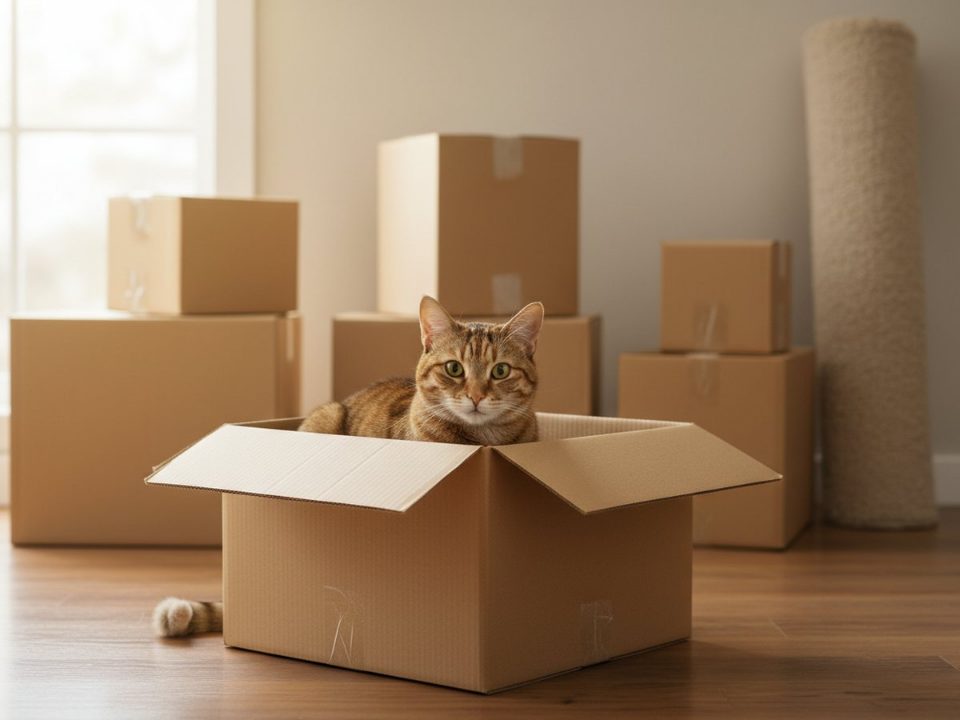
Every moving checklist has a line that says "arrange care for pets," as if the dog were a houseplant. In practice a move is the riskiest week of a pet's year: the front door stands open for hours, strangers carry their bed away, and the new house smells like nobody. Most of the risk is avoidable with a little lead time, and most of the stress is avoidable with routine. These ten steps run in the order you need them, from six weeks out to the first week in the new place. They pair well with the 6-week moving checklist and with our packing hacks.
Update the microchip and the ID tag before anything else
If your pet slips out during the move, the microchip and the tag are how they come back, and both point to your old address and maybe an old phone number. Ready.gov's pet guidance says to keep the microchip's address and phone number up to date and to include an emergency contact outside your area. The ASPCA recommends a collar tag with the pet's name, your phone number and any urgent medical needs, and for travel a temporary tag with your cell and destination number. Not sure which registry your pet's chip is listed with? AAHA's free Microchip Registry Lookup tells you.
Book the vet visit early and get copies of everything
Ask your current vet for the full medical record, vaccination history (especially rabies) and any prescriptions, and refill medications so you have a few weeks' supply after the move. The ASPCA's preparedness advice is to keep copies of medical records and a supply of any medicine your pet needs in a waterproof container. Ask for a referral to a vet near the new address, too; the first emergency in a new city is a bad time to start searching.
Moving to another state? Check the destination's rules
USDA APHIS is explicit that it doesn't regulate pets moved between states by their owners; the receiving state or territory sets the rules. Those can include a health certificate, updated vaccinations, testing or treatments. APHIS lists every state's animal health official, and advises contacting your vet as soon as you know your travel details. The ASPCA adds: carry your pet's rabies record across state lines and ask your vet whether a certificate of veterinary inspection is needed. Birds, reptiles and exotic species can have stricter rules than dogs and cats, so check early.
Introduce the boxes and the crate weeks ahead
Boxes appearing overnight is upsetting to a cat. The ASPCA suggests bringing moving boxes out early so cats can get used to them, and keeping pets in a familiar room you plan to pack last. For the crate or carrier, start weeks out: put food inside the open crate, then short drives, then treats and play afterward. A pet that already likes its crate is a pet you can actually move.
Keep the routine, even while the house comes apart
Feeding, walks and bedtime are the parts of the day your pet can still predict. Keep them at the same times through packing week, even when it means stopping mid-box. Pack the pet's things last and unpack them first, and don't wash the bed or blanket right before the move; it's the one thing that will smell like home on the other end.
On moving day, a closed door or a friend's house
The ASPCA's moving-day advice is simple: confine pets to a quiet room with the door shut, or leave them at a friend's house. Put a sign on the door ("Pets inside, keep closed"), add water, the bed and a litter box, and tell the crew. Empty that room last, once everything else is on the truck. For anxious dogs or cats, a day at a sitter or a boarding facility may be kinder than a day of thuds through the door.
Make the car ride boring
The ASPCA recommends a well-ventilated crate or carrier secured so it can't slide during a sudden stop, or, without a crate, a harness attached to a seat belt in the back seat and no head out the window. Bring a travel kit: food, bowl, leash, waste bags, medication, first aid, documents, plenty of water and a familiar toy. Feed a light meal a few hours before you leave rather than in the moving car. And never leave a pet alone in a parked car: the ASPCA notes a parked car can become a furnace on a hot day, even with the windows open, and hold in the cold in winter.
Small pets, birds and fish need their own plan
Small animals and birds travel best in their own familiar cage or carrier, covered partly to cut visual stress, kept level and out of direct sun and drafts. Fish are the hardest to move: a common approach is to transport them in sealed bags or a bucket of their own tank water, carry the filter media wet so the beneficial bacteria survive, and set the tank up again before they go back in. Ask your vet or a local aquarium store about your species and the length of the drive.
Pet-proof the new place before the pet arrives
Walk the new home first. The ASPCA's list: tuck away electrical cords, check that window screens are secure, and remove poisonous plants. Look for gaps behind appliances, open vents, and fence gaps or loose boards outside. The ASPCA's toxic and non-toxic plants list is worth checking against anything the previous owners left in the yard, especially lilies if you have a cat.
Start with one room, then expand
The ASPCA recommends letting pets adjust to one room first, a home base with toys, food and water bowls and the litter box, before opening up the rest of the house. For cats, move the litter box gradually toward its permanent spot, about a foot a day. For dogs, walk the new neighborhood on a leash for the first weeks; a dog that hasn't learned the new route home is the one most likely to try the old one.

How MoveBuddy helps when you move with pets
- The pet box, findable. Snap the open box of records, meds, food and toys and the AI lists it. Ask for anything in it later.
- A room on every box. The crew sees where each box goes, and door signs keep the pet room clear.
- Hands-free on moving day. Holding a leash? Ask "where does box 12 go?" and hear the answer.
- Shared with the household. Invite the person on dog duty with a QR or a join code; everyone sees the same boxes.
Free to start on iPhone and Android: your first boxes and AI snaps are on us, and you only pick a move pack when the real packing begins.
The pet moving checklist
Print it, stick it on the bin, tick it off. One page.
- Microchip phone number and emergency contact updated; new address on move-in day
- ID tag with a phone number that will ring on moving day; travel tag with cell and destination
- Vet records, rabies certificate and prescription refills collected; new vet chosen
- Destination state's pet entry rules checked if moving interstate
- Boxes out early; crate or carrier practice started weeks ahead
- Feeding, walks and bedtime kept on schedule through packing week
- Pet box packed: food, bowls, meds, leash, litter, bed, favorite toy
- Moving day: pet in a closed, signed room or at a friend's house
- Crate secured in the car; water, travel kit; never left in a parked car
- New home walked: cords, screens, gaps, toxic plants checked
- One home-base room set up first; litter box moved gradually
- Leashed walks around the new neighborhood for the first weeks
From “Moving with pets: 10 ways to keep dogs and cats calm and safe” — https://movebuddy-ai.com/blog/moving-with-pets · MoveBuddy AI
Questions people ask
How do I keep my cat calm during a move?
Bring the boxes out early so they become furniture, keep feeding and play times steady, and keep the cat in a quiet, closed room on moving day. In the new place, start with one room that has the litter box, food, water and familiar bedding before giving access to the whole house.
Do I need a health certificate to move my dog to another state?
It depends on the destination. USDA APHIS says the receiving state or territory sets the requirements, which can include a health certificate and current vaccinations. Check the destination state's animal health official and talk to your vet as soon as you know your dates.
When should I update my pet's microchip?
Before the move. Update the phone number and add an emergency contact as soon as you know them, then update the address on move-in day. If you don't know which registry holds the chip, AAHA's lookup tool will tell you.
Should my pet be at home on moving day?
Only if you can keep them behind a closed door in a quiet room for the whole day. Otherwise a friend's house or a sitter is safer and calmer than an open front door and a crew carrying furniture.
Sources & further reading
- ASPCA, Moving with your pet: boxes out early, quiet room on moving day, crate practice, pet-proofing and a home-base room.
- ASPCA, Travel safety tips: microchip and travel tag, secured crate, travel kit, rabies record across state lines, never leave pets in a parked car.
- ASPCA, Disaster preparedness: ID tag contents, copies of medical records and medicine supply.
- Ready.gov, Prepare your pets for disasters: keep microchip address and phone current and add an out-of-area emergency contact.
- USDA APHIS, Take a pet from one U.S. state or territory to another: requirements are set by the receiving state; state animal health officials.
- AAHA, Microchip Registry Lookup: find which registry holds your pet's microchip.
- ASPCA Animal Poison Control, Toxic and non-toxic plants: check plants in the new home and yard.
Keep reading

Moving with kids: 10 ways to make the move easier on them (and you)
Kids handle a move better when they know what's happening, have a job to do and find their own things on night one. Here's how, from the first conversation to the first bedtime.
Moving week checklist: what to do each day, and on moving day itself
The last seven days decide whether moving day is long or awful. Here's what to do each day, what to sign on the day, and the walkthrough that catches what you'd otherwise leave behind.
The first-night box: what to pack so night one isn't a scavenger hunt
One box per person, packed last, loaded last and carried in by you. Everything you need from the moment the truck leaves until you're ready to unpack the rest.
The 6-week moving checklist that actually works
No 200-item spreadsheet: what matters each week, from booking the truck to the first-night box, plus the one habit that makes unpacking painless.