Moving with kids: 10 ways to make the move easier on them (and you)
Kids handle a move better when they know what's happening, have a job to do and find their own things on night one. Here's how, from the first conversation to the first bedtime.

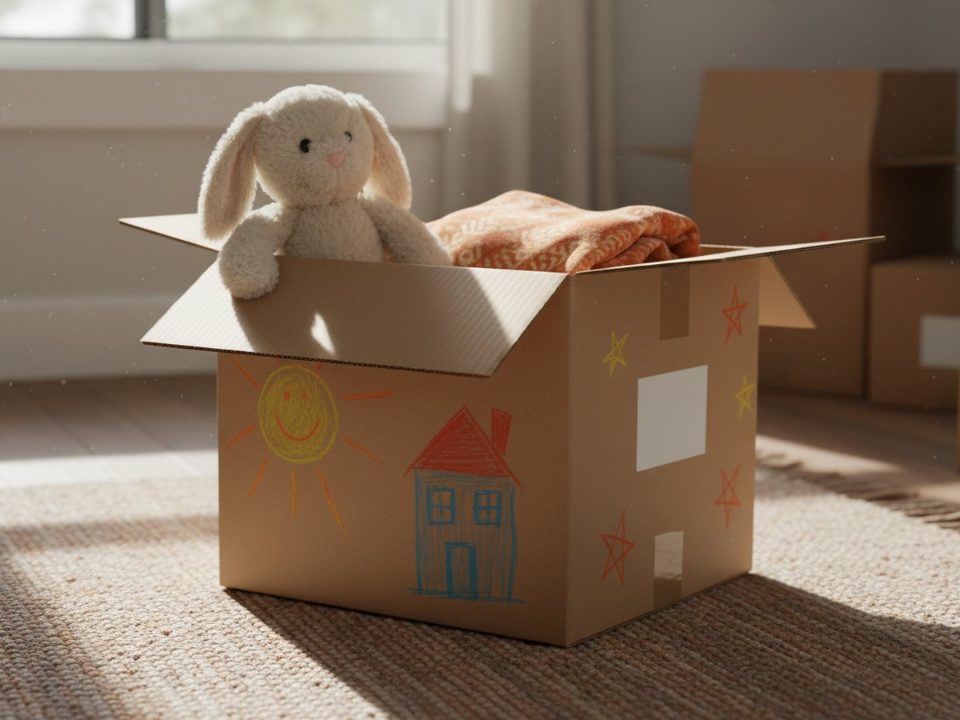
For adults a move is a project. For kids it's something that happens to them: their room disappears into boxes, their friends stay behind, and for a few weeks nobody can find anything. The American Academy of Child and Adolescent Psychiatry calls moving to a new community one of the more stressful things a family goes through, and notes it tends to be harder the older the child is, because friends matter more.
You can't take the change away, but you can make it predictable. These ten tips follow the move from the first conversation to the first night, and they work alongside the 6-week moving checklist, our moving week plan and the first-night box.
Tell them early, and tell them why
Kids sense a big change before anyone says it out loud. Children's Health, the Dallas pediatric system, notes that even younger children who don't fully understand what moving means can feel anxious when they sense something big is coming. So tell them early, in plain words, and explain why: a new job, more room, closer to family. AACAP's first suggestion is the same: explain clearly why the move is necessary. Then let them be sad about it. "I'll miss my room" deserves "me too," not a pitch.
Make the new place real before you get there
The unknown is the scary part. Show them the new home, the street, the park and the school: in person if you can, and through photos, maps and videos if you can't. AACAP recommends familiarizing children with the new area and pointing out the things they'll like there, a lake, a trail, a library, a pool. A child who has already picked out "the tree I'm going to climb" is moving toward something.
Give them real choices
Children's Health puts it simply: kids from toddlers to teens want some control, and when they're involved in the move they feel less stressed. Offer choices with real answers: which bedroom (if that's genuinely open), the wall color, where the bed goes, which toys to donate. Let older kids research the new town's teams, clubs and libraries.
Give each child a job and their own box
Packing is a job most kids can do. Give each child a box or two of their own to pack, decorate and label: stickers, drawings, their name in big letters. Toddlers can put stuffed animals in a box; school-age kids can wrap their books; teens can own their whole room. Pack their room last so it stays normal as long as possible, and unpack it first in the new place.
Protect the routines that keep them steady
The house can be chaos; bedtime shouldn't be. Keep meals, bedtime stories, screen rules and weekend rituals as close to normal as you can, before, during and after the move. Children's Health quotes its psychologist: routines help children feel safe and secure no matter where they live. For the same reason, don't stack other big changes on top of the move. A new bed, potty training or a new sibling's room can wait a month.
Sort out the school early
Call the new school as soon as you have an address. Ask what enrollment needs (proof of address, birth certificate, immunization records, last report card), when your child can visit, and how records move. Under FERPA, the federal student-privacy law, a school may send a student's education records to another school where the student seeks or intends to enroll without the parents' consent, and the U.S. Department of Education says that can include all of them, including special-education records. It still helps to request copies yourself and carry them, so a slow transfer doesn't hold up placement. If you can, visit the school before the first day and meet the teacher.
Plan moving day around them
Moving day is long, loud and full of strangers carrying their things away. Young kids are often happiest at a grandparent's or a friend's for the day. If they're home, give them a room that's already packed and out of the traffic, with snacks, a tablet or a stack of books, and a sitter or a rotating adult. Older kids can have a real job: checking their room is empty, guarding the first-night box, keeping the dog company.
Childproof the new home before you unpack
A new house is full of hazards you haven't found yet, and a half-unpacked one is worse: boxes to climb, tools on the floor, furniture not yet secured. Before kids run loose, anchor dressers, bookcases and TVs. The Consumer Product Safety Commission's Anchor It! campaign says anchoring all furniture with drawers, doors and shelves to the wall prevents tip-over injuries and deaths, and you need only an anchoring kit, a drill, a screwdriver and a stud finder. Cover outlets, put gates at stairs, move cleaning supplies and medicines up high, check window locks, and keep box cutters and tools in one box out of reach.
Make the first night feel like home
Each child should have a first-night box packed with them: pajamas, the stuffed animal, the night-light, their pillow, a favorite book, a toothbrush. Set up their bed before anything else, ideally in the same arrangement as the old room. For babies, the American Academy of Pediatrics' safe-sleep rules don't pause for a move: back to sleep, on a firm, flat surface, with nothing else in the crib.
Test the smoke alarms on night one; the U.S. Fire Administration says battery-powered alarms should be tested monthly. Then walk the kids through how to get out of the house in a fire. Ready.gov recommends two ways out of every room, practicing the plan twice a year, and teaching children not to hide from firefighters. A new house is exactly when that plan has to be made fresh.
Stay connected to the old life while building the new one
Let kids say goodbye: a last visit to the park, a party, a photo book of the old house and friends. Set up video calls and, for younger kids, letters or postcards. Then help them plant roots: sign up for a team, a class or the library, and get involved yourself, which AACAP also recommends. Watch for signs a child isn't settling: changes in sleep or appetite, withdrawal, a drop in grades, irritability. AACAP lists these as warning signs of depression; if they last, talk to your pediatrician.
How MoveBuddy helps when you're moving with kids
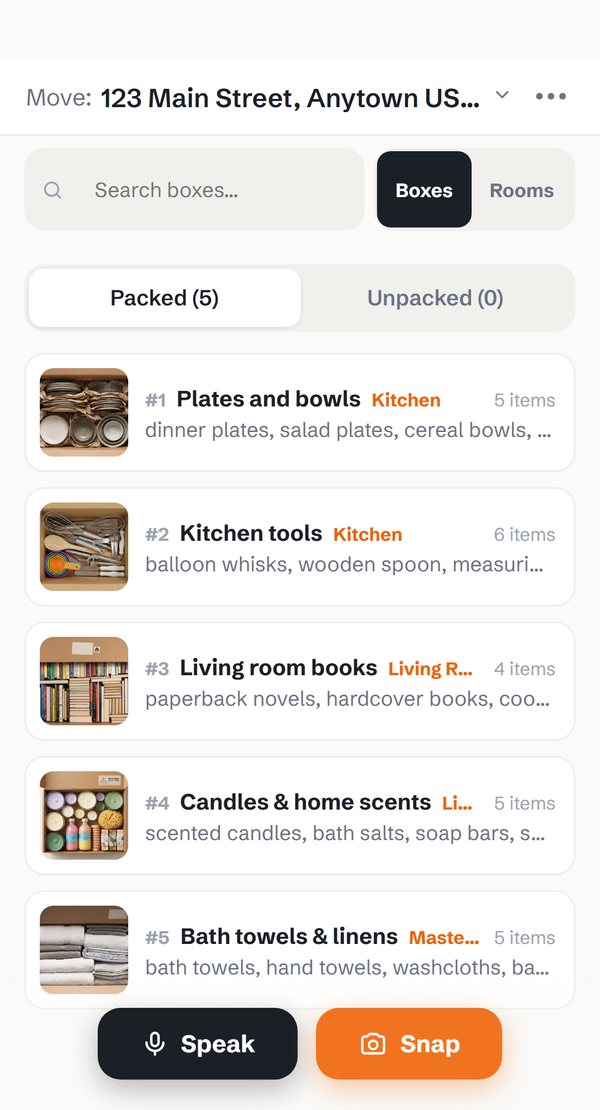
- Their box, findable. Kids snap their own boxes; the AI lists the contents, and "where's my blue blanket?" gets a box number and a room.
- Rooms for every box. Assign each box to a child's bedroom and see it in the boxes-by-room view; print door signs so the crew puts it there.
- Helpers who can look things up. Share the move with a grandparent or an older child by QR or a rotating join code.
- Hands-free on the day. Ask "where does box 12 go?" with your arms full and hear the answer.
Free to start on iPhone and Android: your first boxes and AI snaps are on us, and you only pick a move pack when the real packing begins.
The moving-with-kids checklist
Print it, stick it on the bin, tick it off. One page.
- Told the kids early, with the reason; made room for sad
- Showed them the new home, street, park and school (in person or photos)
- Offered real choices: room, paint color, furniture layout, what to donate
- Each child packed and decorated their own box; their room packed last
- Routines kept: meals, bedtime, weekend rituals; no other big changes stacked on
- New school contacted; enrollment documents and record copies in hand
- Moving-day plan for the kids: a sitter, a grandparent or a quiet packed room
- Dressers, bookcases and TVs anchored before kids roam the new house
- Outlets, stairs, cleaning supplies, medicines and windows childproofed
- First-night box per child; their bed set up first; baby's crib bare
- Smoke alarms tested; fire escape plan walked through with the kids
- Goodbyes said; video calls set up; a new club, team or class booked
From “Moving with kids: 10 ways to make the move easier on them (and you)” — https://movebuddy-ai.com/blog/moving-with-kids · MoveBuddy AI
Questions people ask
How do I tell my child we are moving?
Early, in plain words, with the reason. Then listen. Let them be sad, answer their questions honestly, and show them something concrete about the new place: the house, the school, the park.
How long does it take a child to adjust to a move?
It varies by age and personality. Many kids take a few weeks to a few months; older children and teens, whose friendships matter more, often take longer. If sleep, appetite, mood or grades change and stay changed, talk to your pediatrician.
What is the best age to move with kids?
There's no perfect age. Younger children tend to adjust faster; AACAP notes the older the child, the harder the move tends to be because of the importance of peers. For school-age kids, moving over the summer avoids a mid-year school change.
How do school records transfer when you move?
The new school usually requests them from the old one, and FERPA allows that without parental consent when the student is enrolling. Ask both schools what they need and carry copies of report cards, immunization records and any special-education plans to avoid delays.
Should kids help pack?
Yes. Packing their own box gives them some control over the change. Toddlers can pack soft toys; older kids can pack and label their whole room.
Sources & further reading
- American Academy of Child and Adolescent Psychiatry, Moving: Helping Children Cope: explain why, familiarize kids with the new area, get involved locally, warning signs.
- Children's Health, How to Help Your Child Adjust to Moving: involve kids for a sense of control, keep routines, prepare for the new school.
- U.S. Department of Education, Protecting Student Privacy, Does FERPA permit schools to disclose education records to another school where the student seeks or intends to enroll?: yes, without parental consent.
- U.S. Consumer Product Safety Commission, Anchor It!: anchor all furniture with drawers, doors and shelves; the tools you need.
- HealthyChildren.org (American Academy of Pediatrics), How to Keep Your Sleeping Baby Safe: back to sleep on a firm, flat surface, nothing else in the crib.
- U.S. Fire Administration, Smoke Alarms: test battery-powered alarms monthly.
- Ready.gov, Home Fires: two ways out of each room, practice twice a year, teach children not to hide from firefighters.
Keep reading
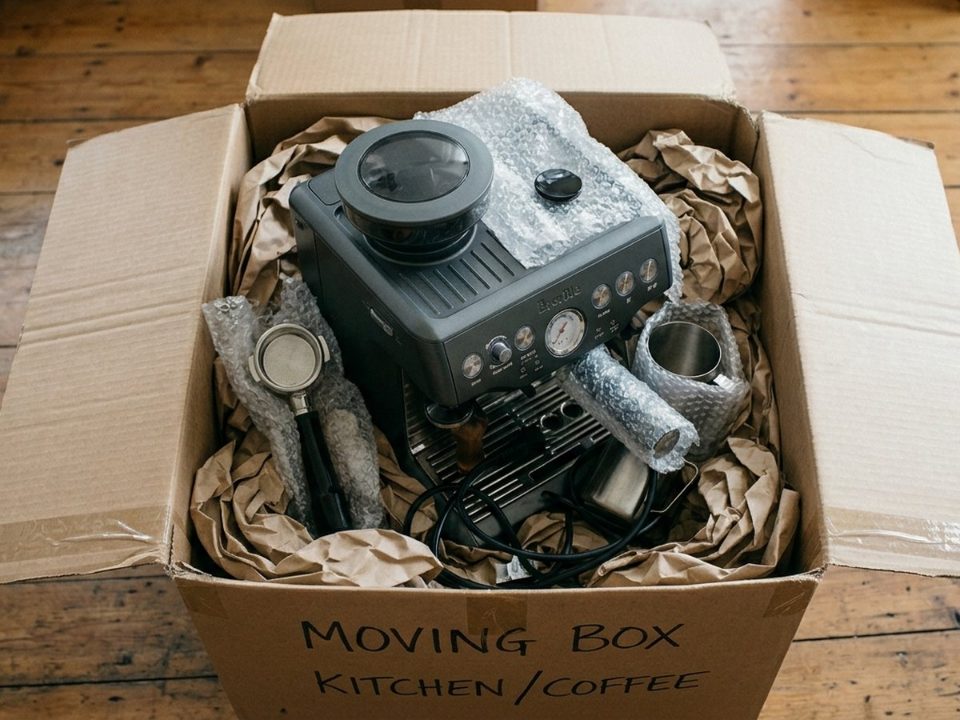
The first-night box: what to pack so night one isn't a scavenger hunt
One box per person, packed last, loaded last and carried in by you. Everything you need from the moment the truck leaves until you're ready to unpack the rest.
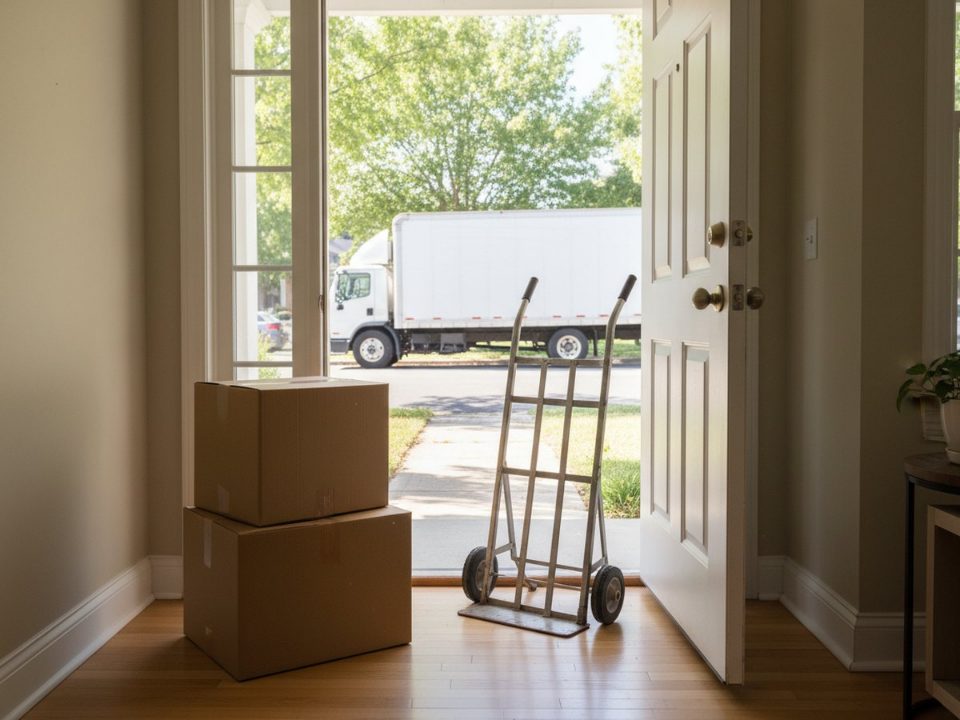
Moving week checklist: what to do each day, and on moving day itself
The last seven days decide whether moving day is long or awful. Here's what to do each day, what to sign on the day, and the walkthrough that catches what you'd otherwise leave behind.
10 packing hacks for moving that actually save time
Not a hundred clever tricks, ten habits that pay off twice: once when you tape the box, and again on the other end when you need something out of it.
The 6-week moving checklist that actually works
No 200-item spreadsheet: what matters each week, from booking the truck to the first-night box, plus the one habit that makes unpacking painless.