10 packing hacks for moving that actually save time
Not a hundred clever tricks, ten habits that pay off twice: once when you tape the box, and again on the other end when you need something out of it.

Most packing advice is a list of tricks. What actually makes a move go well is a handful of habits that pay off twice: once when you tape the box shut, and again three weeks later when you are standing in a new kitchen looking for the can opener. These ten are the ones that hold up. If you want the week-by-week plan around them, it lives in our 6-week moving checklist.
Purge before you buy a single box
Every item you pack costs you three times: the box and tape, the carry out, the carry in. Then it costs you a fourth time when you unpack it and decide you never wanted it. So the first hack is not a packing hack at all: go room by room with three bags (donate, recycle, trash) before the boxes arrive. Start with the rooms you use least; decisions there are easy and the momentum carries.
Heavy things in small boxes, light things in big ones
The classic mistake is a large box full of books: too heavy to lift safely, and the bottom fails. Put books, records, tools and canned food in small boxes; save the large boxes for pillows, lampshades, bedding and stuffed animals. For a sense of scale: the NIOSH lifting equation, the standard occupational tool for safe lifting, starts from a "load constant" of about 51 pounds (23 kg) for an ideal lift, close to the body, at waist height, with good handholds, and reduces it from there. A box carried down a staircase is far from ideal, so aim well under that.
Pad with what you already own
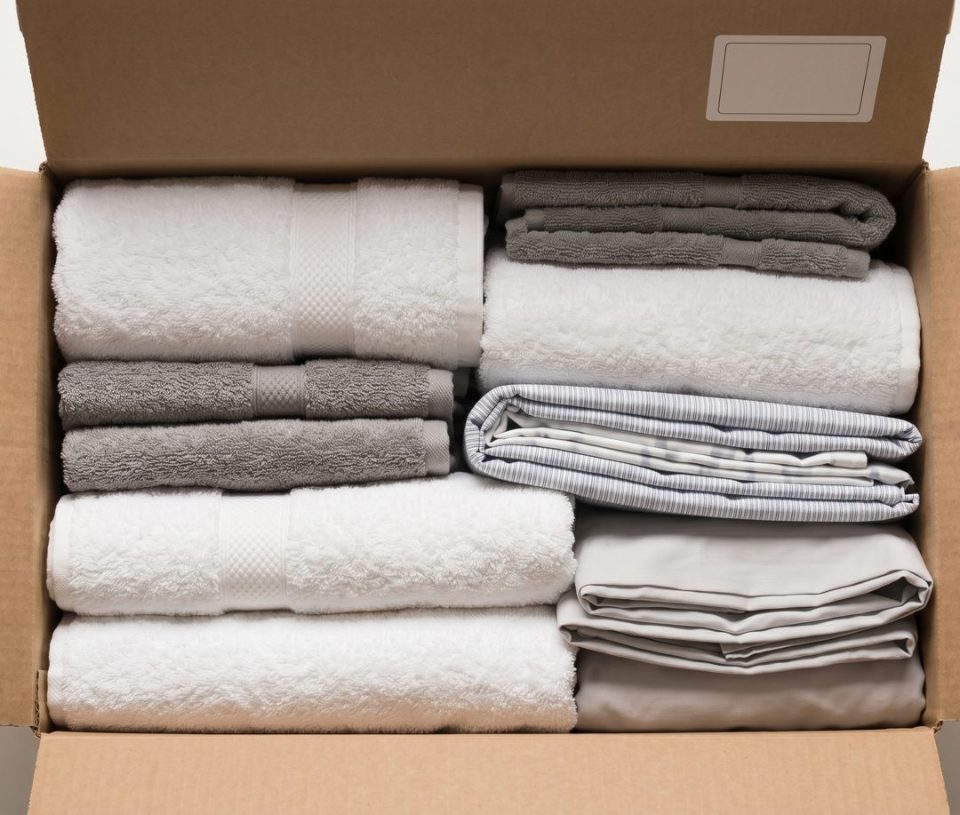
Towels, sheets, blankets, sweaters and socks are packing material that has to move anyway. Wrap a vase in a bath towel, stand glasses inside clean socks, fill the gaps around a lamp base with a fleece. You buy less bubble wrap and pack two rooms at once. The exceptions: don't use anything you'll need on the first night (that goes in the open-first box), and don't pad with clothes you care about around anything that can leak.
Fill every gap, then tape the bottom like an H
A box with empty space is a box that caves when another box lands on top of it. Pack heavy items on the bottom, lighter on top, and fill the voids with paper, linens or crumpled newsprint until nothing shifts when you tilt the box. The lid should close flat, not bulge and not sag. Tape the bottom seam and both edges in an H pattern, and do the same on top. Reused boxes are fine (the EPA puts the recycling rate for corrugated boxes at 96.5 percent, so plenty are in circulation), but skip any with soft corners or water damage.
Pack plates on edge and glasses with their own padding
Wrap each plate and stand them on edge in a small or medium box with a cushion of paper underneath, like records in a crate. Wrap glasses individually, stuff the inside with paper, and stand them upright with padding between; a box with cardboard cell dividers makes this faster.
Leave clothes on their hangers, and ask before emptying dressers
Gather a dozen hangers, pull a large trash bag up from the bottom of the clothes, and tie it around the hooks. They go straight onto the new closet rod. Dressers are different: whether you can leave soft, light clothing in the drawers depends on who is carrying them and how, so ask your mover. Anything heavy, fragile or valuable comes out either way, and drawers that slide should be wrapped or taped shut with tape that won't damage the finish.
Make toiletries leakproof with plastic wrap
Unscrew the cap of every liquid (shampoo, lotion, cleaning sprays you are keeping), lay a square of plastic wrap over the opening, and screw the cap back on over it. Then bag them by room, stand them upright in a small box, and fill the gaps. One burst bottle can ruin a box of linens.
Photograph the cables, then bag the screws with the furniture
Before you unplug the TV, the router or the desk setup, take a photo of the back of each one. It is the wiring diagram you will want at 10 p.m. on the first night. When you take apart a bed frame, a table or a shelf, put every bolt, bracket and the little hex key into a zip bag, write what it belongs to on the bag, and tape it to the largest piece of that furniture. Small hardware is what goes missing, and a bed you can't reassemble is a bad first night.
Snap the open box before you seal it, and never write "misc"
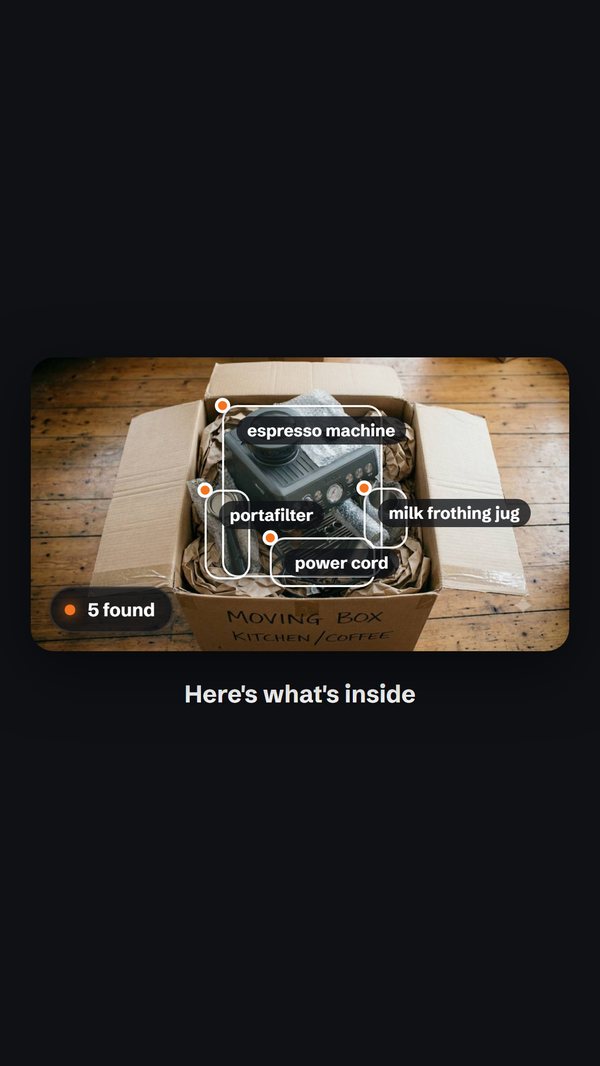
A label that says "Kitchen" tells the movers where a box goes. It does not tell you what is in it. Before the lid closes, take a photo looking down into the open box. It is a contents list that took two seconds and can't go out of date, and it is the end of the "misc" box: six months from now, nobody remembers what misc meant. Then label the box on two sides and the top with its room and a number, so it can be read whichever way it is stacked.
Some things never go on the truck
Movers will not carry hazardous household products: paint, paint thinner, aerosols, propane tanks, pool chemicals, pesticides and similar. The EPA treats leftovers like these as household hazardous waste, so use them up or take them to your local collection site instead of packing them. Then there is the stuff that should ride with you, not the crew: medications, passports and documents, jewelry, cash, laptops and backups, and the keys to the new place. For interstate moves, FMCSA notes that movers can limit their liability for items of "extraordinary value" (more than $100 per pound) unless you list them on the shipping documents. The easiest way to avoid that problem is to keep them in your car. Finally, be there when the movers load: FMCSA advises watching the loading and unloading and checking the inventory before you sign.
How MoveBuddy helps you pack
- The photo does the typing. Snap an open box and the AI lists what's inside; you confirm the items and move on to the next box.
- Ask instead of digging. "Where are my cookbooks?" answers with the box number and the room, weeks after you taped it.
- Hands full? Use your voice. Add items to a box by speaking, or ask questions hands-free on moving day.
- Pack together. Share the move with your partner or a friend who's helping by QR or join code, so everyone adds boxes to the same list.
Free to start on iPhone and Android: your first boxes and AI snaps are on us, and you only pick a move pack when the real packing begins.
The packing-hacks checklist
Print it, stick it on the bin, tick it off. One page.
- Purge room by room before buying boxes: donate, recycle, trash
- Heavy things in small boxes, light things in big ones; nothing you can't lift to your waist
- Pad with towels, linens and socks before buying bubble wrap
- Fill every gap so nothing shifts; tape top and bottom in an H
- Plates wrapped and on edge, glasses wrapped and padded upright
- Hanging clothes stay on hangers inside a tied trash bag
- Plastic wrap under the cap of every liquid; toiletries upright and bagged
- Photo of the back of every electronic before unplugging
- Furniture hardware bagged, labeled and taped to the piece it belongs to
- Photo of every open box before it's sealed; no box labeled "misc"
- Room and number on two sides and the top of every box
- Hazardous products used up or taken to a collection site, not packed
- Medications, documents, valuables and keys ride with you
- Be there for loading; check the mover's inventory before you sign
From “10 packing hacks for moving that actually save time” — https://movebuddy-ai.com/blog/packing-hacks · MoveBuddy AI
Questions people ask
What is the fastest way to pack for a move?
Purge first, then pack the rooms you use least (guest room, garage, books, off-season clothes) weeks ahead, leaving the kitchen, bathroom and bedrooms for the last few days. Use padding you already own, keep a box and tape station in one spot, and photograph each box before you seal it so you don't have to write a long contents list.
How heavy should a moving box be?
Light enough that you can lift it to your waist comfortably and carry it up stairs. The NIOSH lifting equation starts from about 51 pounds for an ideal lift and reduces it for real-world conditions like stairs, reaching and twisting, so most moving boxes should be well under that. Heavy things go in small boxes.
What should you not pack in a moving box?
Hazardous household products (paint, thinner, aerosols, propane, pool and garden chemicals), which movers won't carry, and anything you can't replace or will need right away: medications, documents, jewelry, cash, laptops, chargers and the keys to the new place. Those ride with you.
Is it okay to use free or used boxes?
Yes, as long as they are clean, dry and rigid. Skip boxes with soft corners, water stains or food residue, and use small sturdy boxes (like the ones liquor stores get) for books and other heavy items.
Sources & further reading
- Canadian Centre for Occupational Health and Safety, NIOSH Lifting Equation: assessing relevant handling factors: the load constant of 23 kg (about 51 lb) for ideal lifting conditions, reduced for real-world factors.
- U.S. EPA, Paper and paperboard: material-specific data: corrugated boxes had a 96.5 percent recycling rate in 2018.
- U.S. EPA, Household hazardous waste: paints, cleaners, oils, batteries and pesticides need special care when you dispose of them.
- Penske Truck Rental, Moving? Leave your hazardous materials behind: aerosols, paint, propane tanks and paint thinners among the items not to load.
- FMCSA, Liability and protection: movers may limit liability for items of "extraordinary value" (over $100 per pound) unless they are listed on the shipping documents.
- FMCSA, Tips for a successful move: watch the loading and unloading; the mover must prepare and both parties sign the inventory.
- FMCSA, Moving checklist: accompany the movers during the inventory and note damaged or missing items before signing.