Apartment moving tips: elevators, parking and small spaces
An apartment move is two buildings' rules, one elevator and no driveway. Ten tips for booking the logistics early, packing for small spaces and getting your security deposit back.

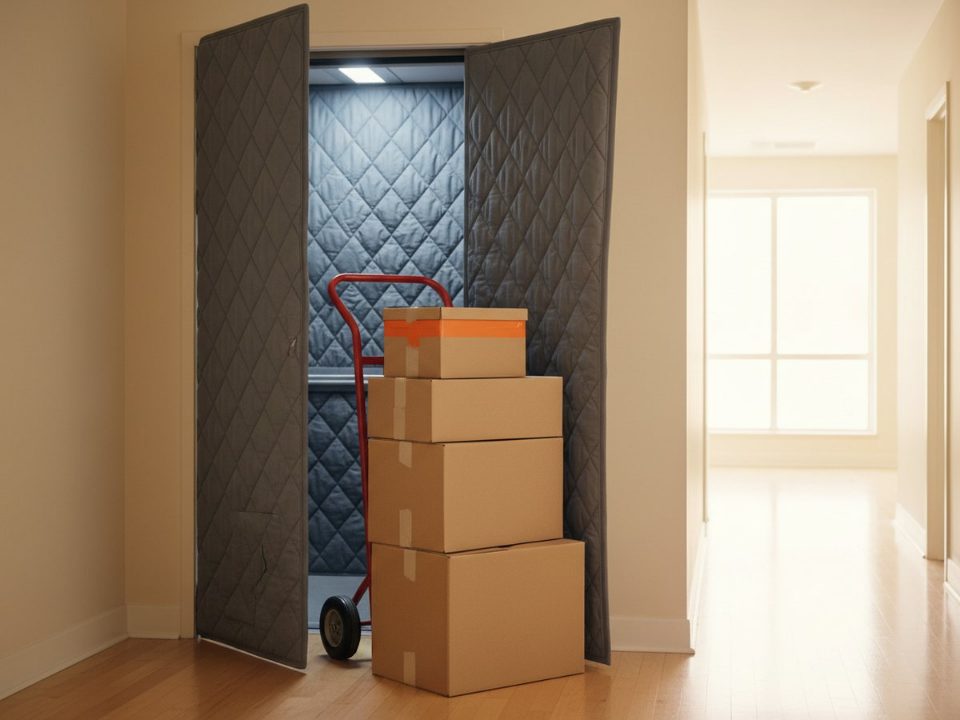
A house move has one set of rules: yours. An apartment move has two buildings' rules, a shared elevator, a loading dock or no loading dock, neighbors in the hallway, and a security deposit riding on how the old place looks when you hand back the keys. None of it is hard, but almost all of it has to be booked or written down before moving day. These ten tips cover the building logistics, packing for small spaces, and the move-out paperwork. For the week-by-week plan, see the 6-week moving checklist; for the packing itself, our packing hacks.
Read both buildings' move rules the day you sign
Ask the management office at both ends for their move-in and move-out rules, in writing. Typical items: permitted move days and hours (many buildings ban weekend or evening moves), a move deposit or fee, an elevator reservation, wall pads, which entrance to use, and whether movers need to provide insurance paperwork. Put each rule in your calendar with the name of the person who told you. When the rules at the two ends conflict (one building only allows mornings, the other only afternoons), you want to know now, not when the truck is idling.
Reserve the service elevator for longer than you think
If there's a service elevator, book it at both buildings, and ask whether the reservation includes pads and a key that holds the doors. Book a window with margin: an apartment's worth of boxes and furniture moves one cart at a time, and a crew that runs out of elevator time stops. If the elevator is shared, ask the office to post a notice so neighbors know when it's tied up.
Get the certificate of insurance sorted early
Many managed buildings require movers to send a certificate of insurance (COI) naming the building or management company before they're allowed in. Get the exact wording from the office, send it to your mover at least a week ahead, and confirm the building received it. A mover without an accepted COI can be turned away at the door. If you're moving across state lines with a professional mover, FMCSA's Protect Your Move pages explain the mover's liability options and the paperwork you should receive.
Solve parking and the loading zone before the truck exists
A truck that has to park two blocks away adds hours. Ask each building where trucks load and whether a dock needs reserving. On a city street, check whether your city issues temporary parking or loading permits for moves and how far ahead you need to apply. Measure the truck's height against any garage or dock clearance, and tell the driver about low trees, tight turns and one-way streets.
Measure doors, halls, stairwells and the elevator
Measure the elevator's door width and interior depth and height, the tightest hallway corner and any stairwell turn, at both buildings. Then measure the sofa, the mattress, the dresser and the desk. If something won't fit, find out now: legs come off, doors come off hinges, and some furniture is cheaper to sell than to fight up a stairwell. Write the measurements on a note in your phone; you'll want them again when you shop for the new place.
Pack small and pack up: boxes you can carry, stacks that stand
In an apartment, every box goes through a door, down a hall and into an elevator, often by you. Use small boxes for heavy things (books, kitchen, tools) and keep each box to a weight you can lift and carry comfortably. Pack tall and square so boxes stack on a cart, and keep the stack away from the door path: in a small apartment, staging space is the first thing you run out of. Pack one room at a time and stack it in that room's corner, not in the living room.
Label for a crew that has never seen your floor plan
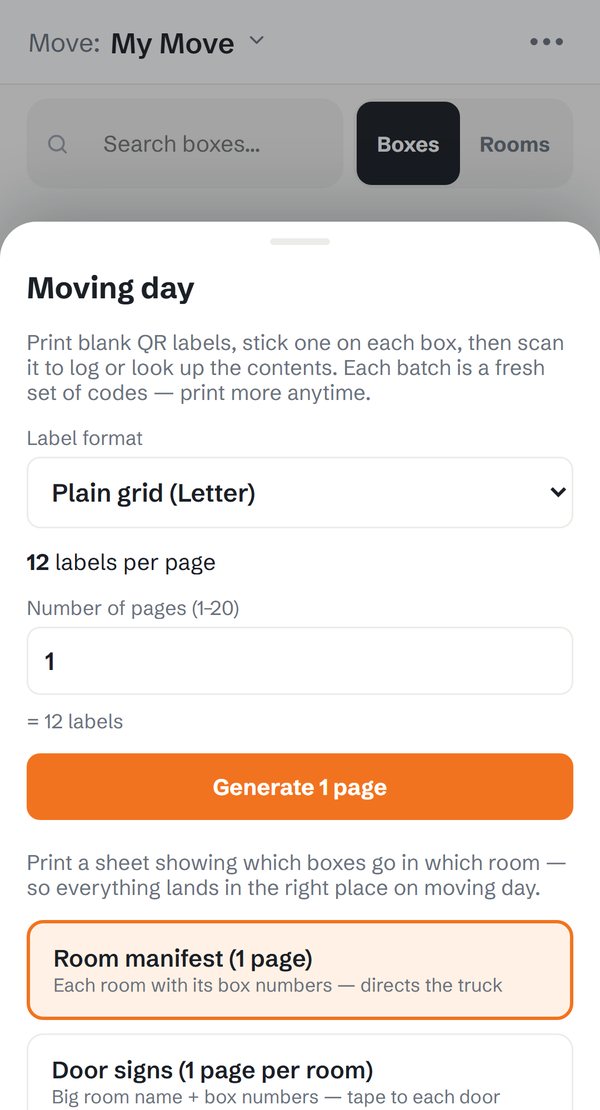
In a new apartment the crew doesn't know which door is the bedroom. Label every box with its destination room on the top and at least one side, and tape a room name to each door in the new place before the first cart arrives. A room manifest (box numbers per room) lets the crew lead check the truck against the plan.
Protect your deposit: document the move-in, request the move-out inspection
Your deposit is protected by state law, and the rules differ by state. Some examples: California's Attorney General explains that landlords must tell tenants of their right to an initial inspection before move-out, so you can fix problems and avoid charges, and must send an itemized statement and return the balance within 21 days. The Texas Attorney General says you must give the landlord a forwarding address to get your deposit back, the landlord must return it within 30 days, and they can't charge for normal wear and tear. Find your own state's rules, then photograph every room on the day you move in and the day you move out, and keep the photos with the lease.
Clean the old place on a schedule, not at midnight
Cleaning an empty apartment takes longer than you'd guess, and it's the last thing standing between you and the deposit. Book it as its own block of time, ideally after the movers leave and before the walkthrough: inside the oven and fridge, bathroom fixtures, floors, and nail holes if your lease asks you to patch them. Leave a small cleaning kit in the car rather than packing it on the truck.
Get renters insurance in place before the keys
The Insurance Information Institute explains that a landlord's policy won't replace your belongings; renters insurance covers your personal possessions, your liability and additional living expenses after a covered disaster. Some buildings require proof of it before move-in. Start the new policy (or move the old one) so coverage starts on move-in day, and ask your insurer how it treats belongings while they're in transit. Then forward your mail with USPS so the deposit check and the first bills find you.
How MoveBuddy helps with an apartment move
- Small boxes, still findable. Snap each box and the AI lists it; search or ask out loud for anything.
- The crew knows where it goes. A room on every box, QR labels, a room manifest and door signs.
- Hands-free at the elevator. Ask "where does box 14 go?" with both hands on the cart.
- Roommates on the same move. Share it with a QR or a join code that rotates every 15 minutes.
Free to start on iPhone and Android: your first boxes and AI snaps are on us, and you only pick a move pack when the real packing begins.
The apartment move checklist
Print it, stick it on the bin, tick it off. One page.
- Move rules for both buildings collected in writing; dates and hours in the calendar
- Service elevator reserved at both ends, with margin; pads requested
- Certificate of insurance wording sent to the mover and received by the building
- Loading zone or dock reserved; street parking permit checked
- Doors, halls, stairwells and elevator measured against the big furniture
- Small boxes for heavy items; stacks staged in each room's corner
- Every box labeled with a room; door signs ready for the new place
- Move-in photos of every room saved with the lease
- Pre-move-out inspection requested where available
- Cleaning block scheduled; cleaning kit in the car
- Forwarding address given to the landlord in writing; mail forwarded with USPS
- Renters insurance starting on move-in day
From “Apartment moving tips: elevators, parking and small spaces” — https://movebuddy-ai.com/blog/apartment-moving-tips · MoveBuddy AI
Questions people ask
How far in advance should I reserve an apartment elevator?
As soon as you know your move date, at both buildings. Popular days (month-end, weekends where allowed) book up, and some buildings only allow one move per time slot.
What is a certificate of insurance for movers?
A document from the moving company's insurer showing their coverage, often naming your building or its management company. Many managed buildings require it before movers can enter. Ask the office for the exact wording and send it to your mover early.
How do I get my full security deposit back?
Know your state's rules, photograph the apartment at move-in and move-out, request a pre-move-out inspection where your state allows it, clean and repair what you can, and give the landlord your forwarding address in writing.
Do I need renters insurance?
Your landlord's policy covers the building, not your belongings. Renters insurance covers your possessions, liability and additional living expenses after a covered loss, and some leases require it.
Sources & further reading
- California Attorney General, Know your rights: security deposits: right to a pre-move-out inspection; itemized statement and return within 21 days.
- Judicial Branch of California, Guide to security deposits in California: the landlord must tell tenants in writing of the right to a pre-inspection.
- Texas Attorney General, Renter's rights: forwarding address required; return within 30 days; no charges for normal wear and tear.
- Insurance Information Institute, Renters insurance: what renters insurance covers and why the landlord's policy doesn't cover your belongings.
- FMCSA, Liability and protection: the two liability options interstate movers must offer.
- FMCSA, Tips for a successful move: the bill of lading and the mover's inventory.
- USPS, Forward mail: change your address and forward mail.
Keep reading
Moving week checklist: what to do each day, and on moving day itself
The last seven days decide whether moving day is long or awful. Here's what to do each day, what to sign on the day, and the walkthrough that catches what you'd otherwise leave behind.
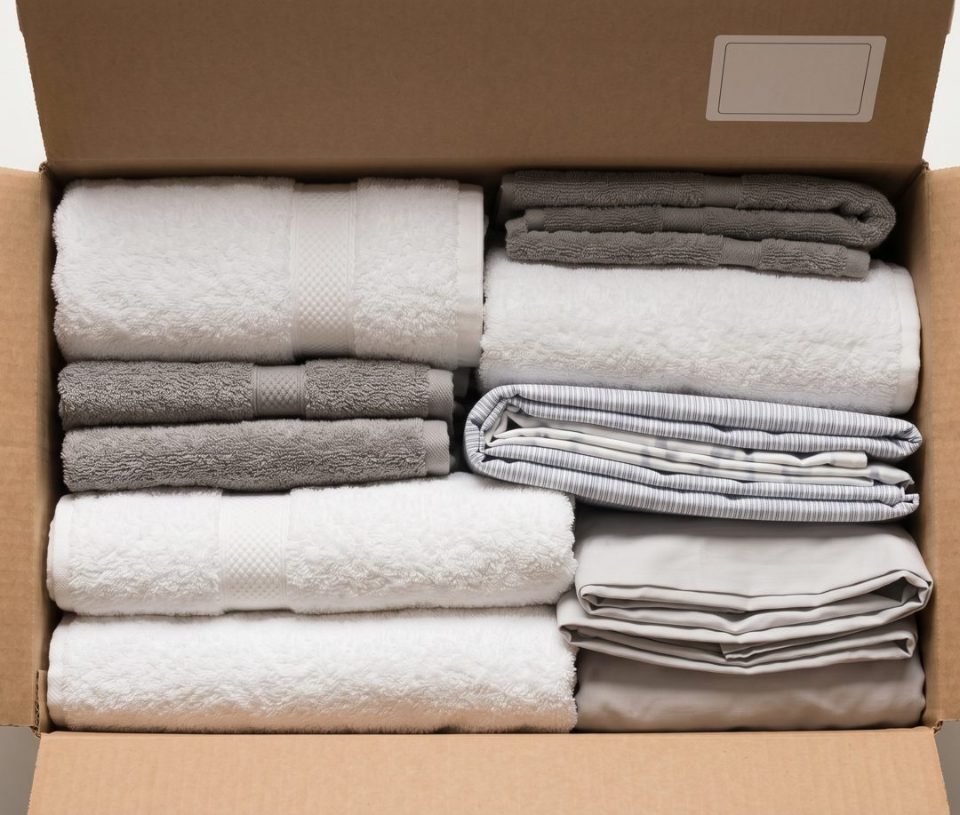
10 packing hacks for moving that actually save time
Not a hundred clever tricks, ten habits that pay off twice: once when you tape the box, and again on the other end when you need something out of it.

How many moving boxes do I need? Counts by home size
Start from a published estimate for your home size, get the mix of sizes right, then adjust for books, kitchens and how much you own. Here is how to do it without running out at 11 p.m.
The 6-week moving checklist that actually works
No 200-item spreadsheet: what matters each week, from booking the truck to the first-night box, plus the one habit that makes unpacking painless.