How to unpack after moving: a fast, room-by-room order
Unpacking stalls when every room is half done. Ten steps in the order that gets you sleeping, showering and cooking first, then finishes one room at a time and gets the cardboard out.

The truck leaves, the door closes, and you're standing in a maze of cardboard. Most people start with whatever box is nearest, and two weeks later every room is half unpacked and the garage is a wall of "misc." Unpacking goes fastest in a fixed order: the things you need to sleep, wash and eat first, then one room at a time to done, with the boxes broken down as you go. These ten steps assume the boxes were labeled with a room (our labeling guide covers that) and that you packed a first-night box. The full move plan is in the 6-week moving checklist.
Check the delivery against the inventory before the crew leaves
If you used a mover, check the boxes and furniture off against the mover's inventory as they come in, and note visible damage on the paperwork before you sign. FMCSA explains that the mover must prepare an inventory of your shipment and list any damage or unusual wear, and that you and the mover both sign each page. A box that's crushed on arrival is far easier to claim if it was noted at the door.
Make the beds first
The first thing to unpack is sleep: bed frames assembled, mattresses down, sheets on, one per person. You will be more tired than you think at the end of moving day, and a made bed turns a chaotic night into a merely messy one. Pull the bedding from the first-night box, not from a box labeled "linen closet."
Bathroom second: towels, toilet paper, shower basics
Next, the bathroom: toilet paper, hand soap, a towel per person, toothbrushes, the shower curtain and its rings, and medications. It's a small room and a short list, and it's the one you'll need at 2 a.m.
Kitchen basics, not the whole kitchen
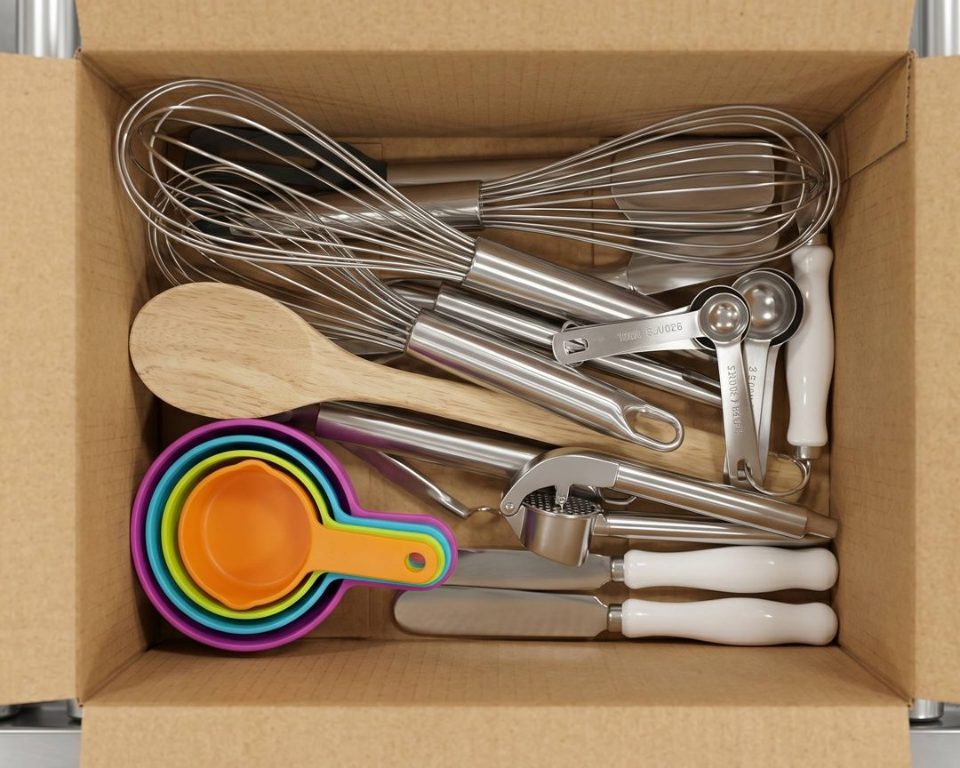
Unpack one working kitchen kit: a pan, a pot, a knife, a cutting board, a plate, bowl, cup and fork per person, the coffee setup and dish soap. Leave the stand mixer, the holiday platter and the fondue set boxed for now. The basics get you through the first days; the rest of the kitchen is a room like any other in step 6.
Get every box to its room, then stop moving boxes
Before unpacking anything else, walk the house and move each box into the room its label names. A box that lives in the hallway for a week gets unpacked into the hallway. If the crew followed door signs, this takes minutes; if everything landed in the garage, it's the most valuable hour of the week.
Unpack one room to done before starting the next
Pick a room and finish it: every box opened, everything put away or put in a "decide later" box, empties out of the room. Then move on. Half-unpacked rooms are why moves take months to finish; a finished room is a place to rest, and it shows progress. Bedrooms and the kitchen usually come first, then the living room, then bathrooms' extras, then the office, then storage areas.
Break down boxes as you go
Flatten each box the moment it's empty and stack the flat boxes in one place, out of the walking path. A room full of empty boxes looks exactly like a room full of full boxes, and it's a tripping hazard. Keep a box cutter, a trash bag and a marker on a tray that travels with you from room to room.
Do the safety checks on day one or two
A new home's safety equipment is an unknown. The U.S. Fire Administration recommends smoke alarms in every bedroom, outside each separate sleeping area and on every level, including the basement; test each one monthly, and replace any alarm that's more than 10 years old. The CPSC recommends carbon monoxide alarms on every level and outside sleeping areas. Find the water shutoff and the breaker panel, and change or rekey the exterior locks if you don't know who has copies.
Anchor tall furniture and TVs before you load them
Dressers, bookcases and TVs are the furniture most likely to tip, and the CPSC's Anchor It! campaign recommends anchoring all furniture with drawers, doors and shelves to the wall. It's easiest to do while drawers and shelves are still empty, so make it part of unpacking each room: anchor first, fill second. Anchoring kits and a stud finder are all you need.
Recycle the cardboard and file any damage claim on time
Cardboard is one of the most recyclable things you'll ever throw out: the EPA reports a 96.5 percent recycling rate for corrugated boxes in 2018. Check what your local program accepts and how it wants boxes prepared, or pass them on to someone else who is moving. If something arrived broken or missing after an interstate move, FMCSA says to file a written claim with the mover within 9 months of delivery; start it while the details are fresh.
How MoveBuddy helps you unpack
- Find before you open. Search or ask out loud, and get the box number and room instead of opening five boxes.
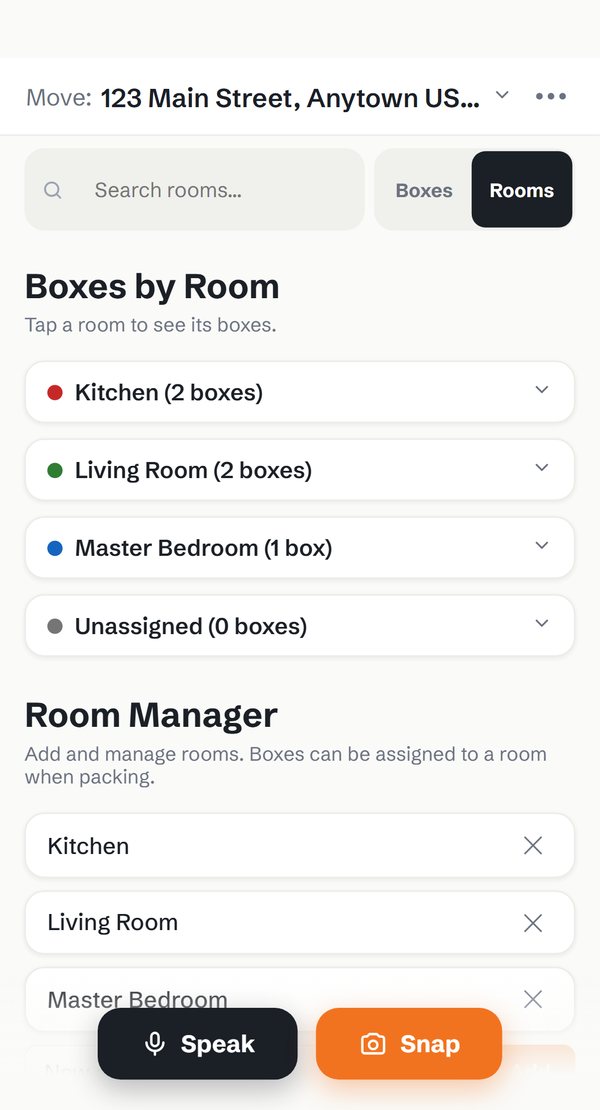
- Boxes by room. See which room every box belongs to and what's still unassigned.
- Packed and unpacked. Tap Unpack box when it's empty; the list of what's left shrinks with you.
- A record for claims. Export the full inventory to Excel or PDF.
Free to start on iPhone and Android: your first boxes and AI snaps are on us, and you only pick a move pack when the real packing begins.
The unpacking checklist
Print it, stick it on the bin, tick it off. One page.
- Delivery checked against the mover's inventory; damage noted before signing
- Beds assembled and made, one per person
- Bathroom basics out: toilet paper, soap, towels, medications
- One kitchen kit unpacked: pan, pot, knife, board, dishes, coffee, dish soap
- Every box moved to the room on its label
- One room unpacked to done before the next
- Empty boxes flattened and stacked out of the way
- Smoke alarms located and tested; CO alarms on every level
- Water shutoff and breaker panel found; locks changed or rekeyed
- Tall furniture and TVs anchored before they're loaded
- Cardboard recycled locally or passed on
- Damage claims filed in writing, well within 9 months
From “How to unpack after moving: a fast, room-by-room order” — https://movebuddy-ai.com/blog/how-to-unpack-after-moving · MoveBuddy AI
Questions people ask
What should you unpack first after moving?
Beds, then the bathroom basics, then a minimal kitchen kit. After that, unpack one room at a time to completion, starting with bedrooms and the kitchen.
How long does it take to unpack after a move?
It depends on the size of the home and how many hours a day you can give it. What matters most is the order: sleeping, washing and cooking first, then whole rooms one at a time, with empties flattened as you go.
How do I deal with all the moving boxes after unpacking?
Flatten them as you empty them, stack them in one place, and recycle them through your local program or pass them on to someone else who is moving.
How long do I have to file a claim for damage from movers?
For interstate moves, FMCSA says you must file a written claim with the mover within 9 months of delivery. Note visible damage on the inventory at delivery, take photos, and file as soon as you can.
Sources & further reading
- FMCSA, Tips for a successful move: the mover's inventory, damage noted, each page signed.
- FMCSA, What if there are problems?: file a written claim with the mover within 9 months of delivery.
- U.S. Fire Administration, Smoke alarms: alarms in every bedroom, outside sleeping areas and on every level; test monthly; replace every 10 years.
- U.S. Consumer Product Safety Commission, Carbon monoxide information center: CO alarms on every level and outside sleeping areas.
- CPSC, Anchor It!: anchor furniture with drawers, doors and shelves, and TVs, to the wall.
- U.S. EPA, Paper and paperboard: material-specific data: corrugated boxes recycled at 96.5 percent in 2018.
- U.S. EPA, Frequent questions on recycling: check what your local recycling program accepts.
Keep reading
The first-night box: what to pack so night one isn't a scavenger hunt
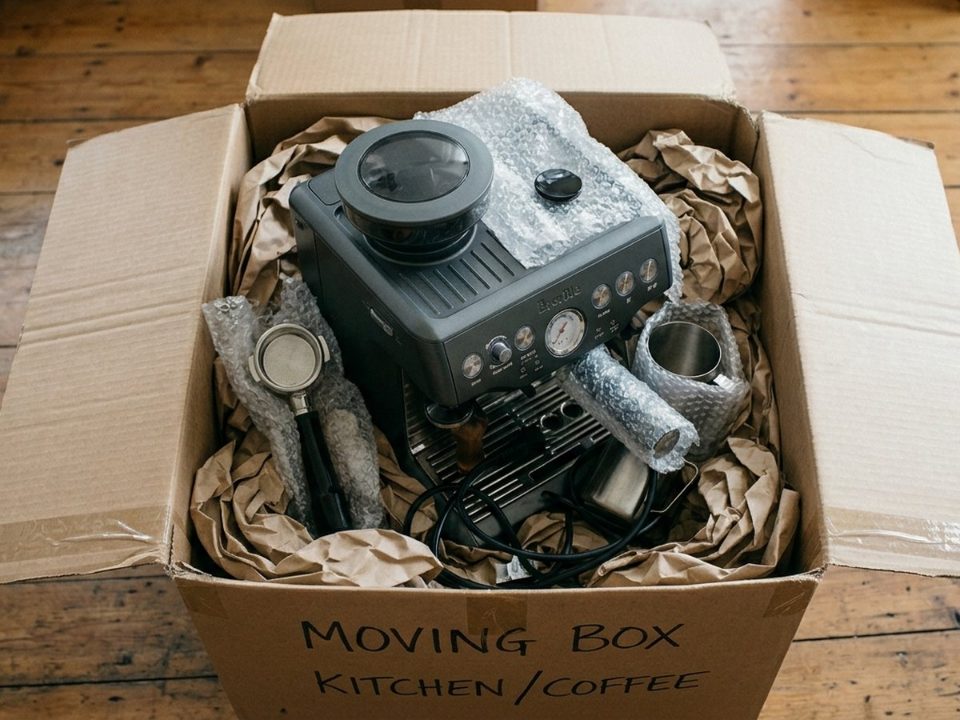
One box per person, packed last, loaded last and carried in by you. Everything you need from the moment the truck leaves until you're ready to unpack the rest.

How to label moving boxes so anyone can unload them
A label has two readers: the person carrying the box, who needs a room, and you in three weeks, who need to know what is inside. Write for both.
Apartment moving tips: elevators, parking and small spaces
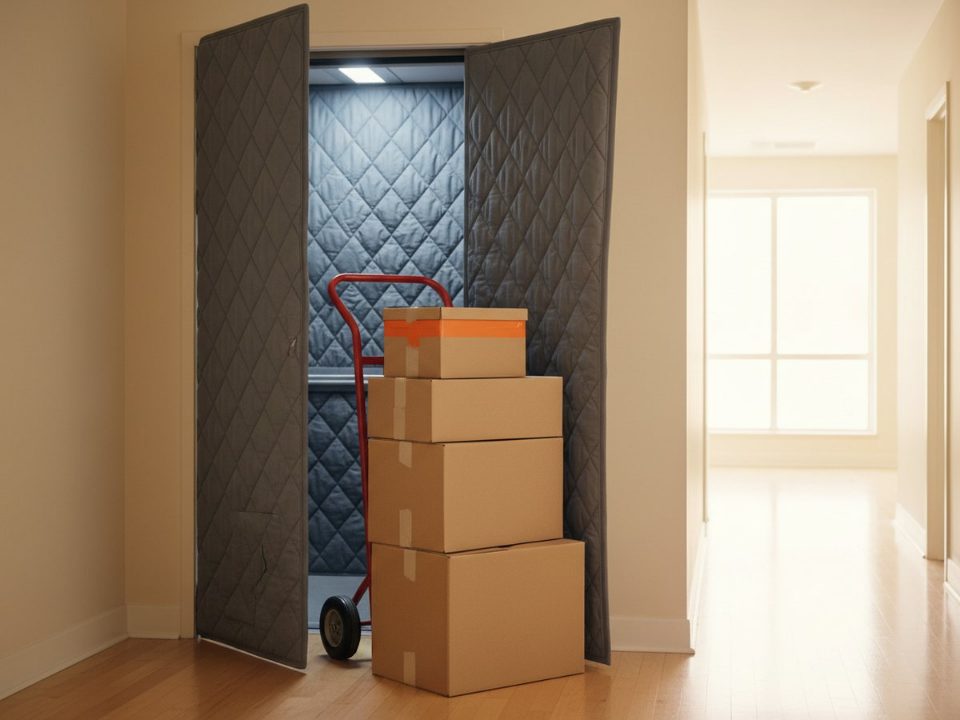
An apartment move is two buildings' rules, one elevator and no driveway. Ten tips for booking the logistics early, packing for small spaces and getting your security deposit back.
The 6-week moving checklist that actually works
No 200-item spreadsheet: what matters each week, from booking the truck to the first-night box, plus the one habit that makes unpacking painless.