How to label moving boxes so anyone can unload them
A label has two readers: the person carrying the box, who needs a room, and you in three weeks, who need to know what is inside. Write for both.


Labeling feels like the easy part of packing, which is why it gets done badly: a scrawled "KITCHEN" on the lid, written at midnight, on a box that will spend moving day at the bottom of a stack where nobody can see the lid. A good label has two readers. The person carrying the box needs one thing, fast: which room. You, three weeks later, need something else: what is inside, without opening six boxes to find out. These ten tips cover both. They pair with our packing hacks and slot into week four of the 6-week moving checklist.
Label the room it is going to, not the room it came from
The carrier at the new place does not care that a box came from "Office." They care whether it goes up the stairs or into the garage. Decide the room names for the new home before you pack (walk the floor plan if you can), and write the destination on every box. If the new layout is different, say so: the old office books might be going to "Living room shelves." Keep the names short and identical everywhere: "Primary bedroom" on the box, on your list and on the door sign, not "Main BR" on one and "Our room" on another.
Write on the top and at least one side, ideally two
Boxes get stacked, and a stacked box only shows its sides. U-Haul's labeling advice is that each box should carry a label on the top and at least one side, so you can read it even when another box sits on top or beside it. Two opposite sides is better: in a truck or a garage, half your boxes will face the wrong way. Put the room name large and the contents line smaller underneath.
Number every box, and keep the list
A number turns a pile into an inventory. Atlas Van Lines suggests numbering boxes and keeping a more detailed list of the contents, handwritten or digital. Numbers also make the end of the move checkable: if a professional mover is involved, the FMCSA says the mover must prepare an inventory of your shipment, which you and the mover sign page by page, and you check it again at delivery. "Boxes 1 to 64, all present" is a sentence you can actually verify. Number as you seal, not in advance, so the numbers follow packing order.
Give each room a color, and put the same color on its door
Words take a second to read; color takes none. Assign each room a color (colored tape, dot stickers or pre-printed colored moving labels) and mark every box for that room. U-Haul recommends color-coding for exactly this reason: it makes it easier to see which box goes where. The other half of the trick happens on moving day: tape a sheet of the same color on each door at the new place, so carriers match color to color without asking you.
Be specific: "Kitchen" is not a contents label
U-Haul's storage-labeling advice is blunt: don't be vague. "Kitchen" tells you where the box came from, not whether it holds the everyday plates or the holiday platter. Write a short, honest summary: "Kitchen: baking pans, mixing bowls, hand mixer." Three to five words of contents is plenty; you are writing a headline, not a packing slip. Never write "misc." A misc box is just a box you will have to open to find out what you meant.
Use a dark marker on light tape, and kill old labels
Labels fail physically more often than you think. A sticky note falls off in the truck; a ballpoint pen disappears on brown cardboard. U-Haul recommends a dark marker on a light-colored tape, such as paper box tape, so the label stands out. If you are reusing boxes from a store or a previous move, black out or tape over every old marking first. A box that says both "Bathroom" and "BOOKS – Living room" will go to whichever room the carrier reads first.
Mark fragile boxes and their top on the sides
"Fragile" on the lid is invisible once the box is stacked, so write it on the sides, along with an arrow pointing up for anything that must stay upright: lamps, plants, liquids, the stand mixer. Atlas Van Lines advises clearly labeling fragile boxes as a reminder. Use it sparingly. If every box says fragile, none of them do.
Mark the boxes you'll need first, and load them last
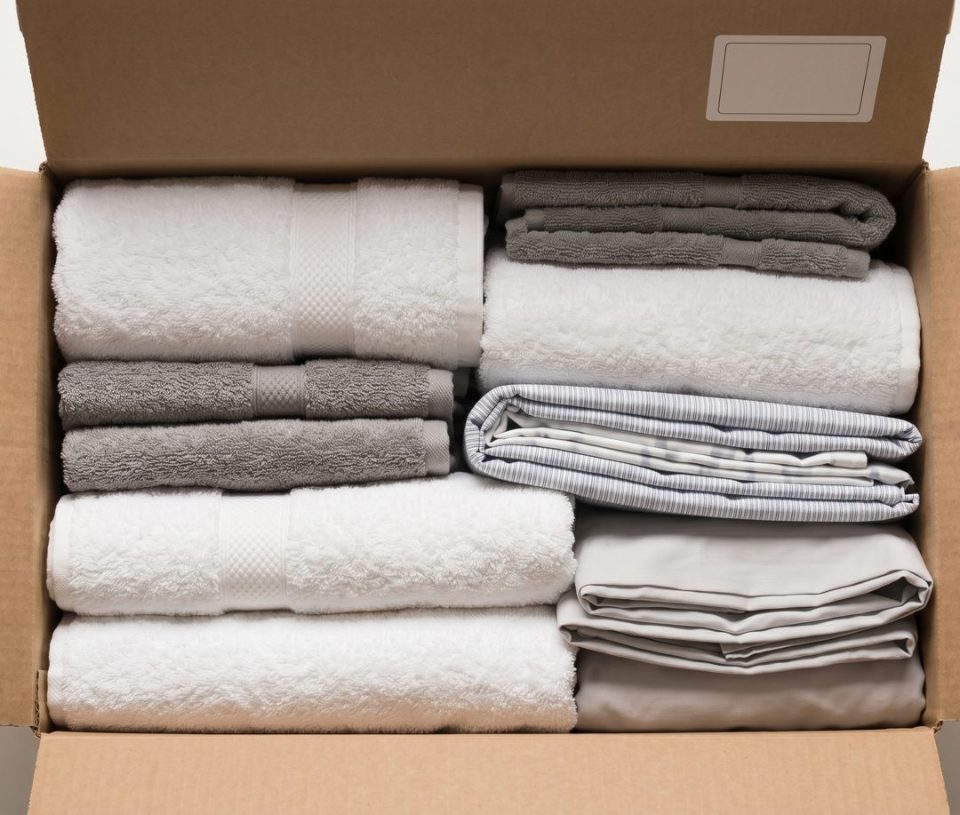
Some boxes need to be found in the first hour: bedding, a towel per person, chargers, the coffee kit, medications, toilet paper. Give these an unmistakable mark (a bright color nobody else is using, plus "OPEN FIRST" on every side) and tell whoever loads the truck to put them on last, by the door. That way they come off first.
Write "HEAVY" when it is, and keep it liftable
Carriers lift with more care when the box warns them. Mark heavy boxes on the sides, and keep them small: books, tools and canned goods belong in small boxes, as Atlas recommends. For a sense of the ceiling, the NIOSH lifting guidance puts the maximum load for a two-handed lift under ideal conditions at 51 pounds, and real moving conditions (stairs, reaching, twisting) are far from ideal. If you can't comfortably lift it, split it.
Photograph the open box before you seal it
The best contents label is one you don't have to write. Before the flaps close, take one top-down photo of the open box with its number visible. It is a contents list that can't be misspelled, it settles "did the good knives go in 12 or 14?", and it costs five seconds per box.
How MoveBuddy helps you label and track boxes
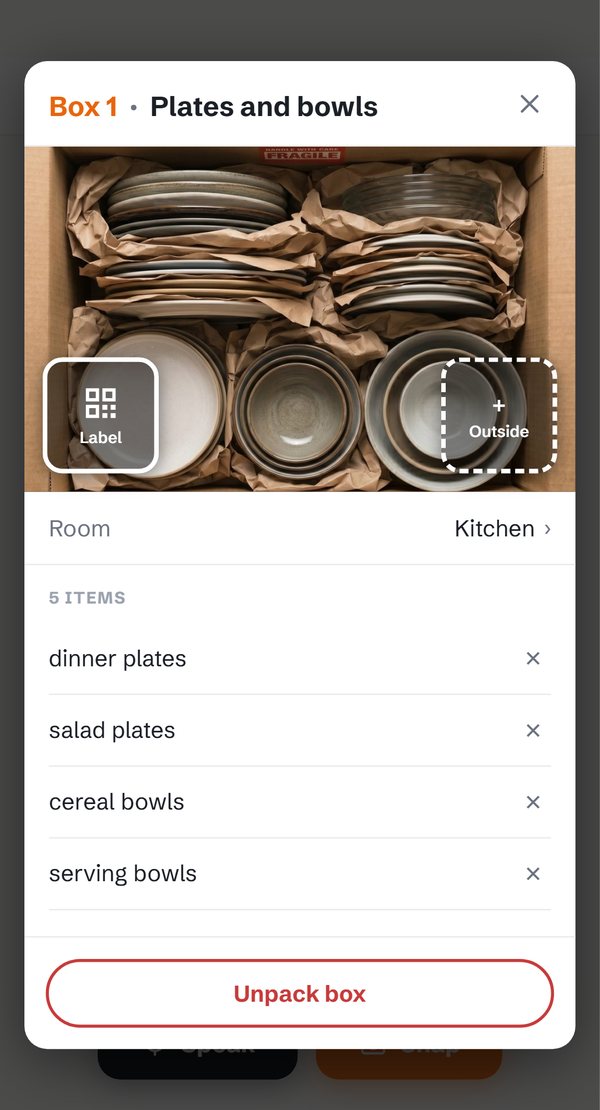
- Numbers and rooms by default. Every box gets the next number and a room; the boxes-by-room view shows what's headed where.
- The photo is the contents label. Snap an open box and the AI drafts the item list; you confirm it and seal the box.
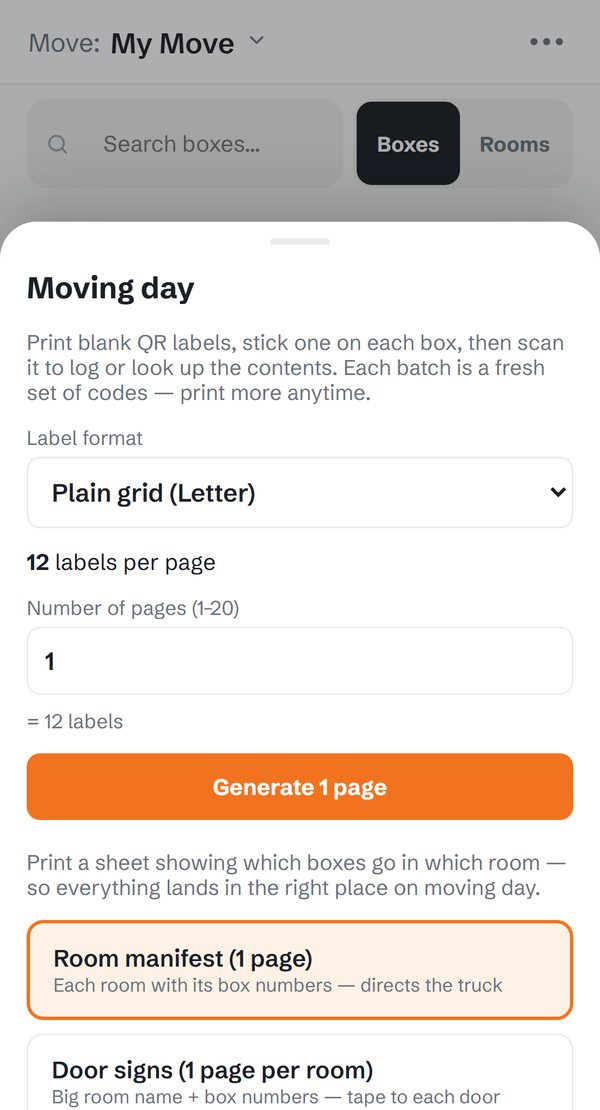
- Print what the move needs. QR box labels, a room manifest for the crew and door signs for each room.
- Ask instead of opening boxes. "Where's the hand mixer?" returns the box number and room.
Free to start on iPhone and Android: your first boxes and AI snaps are on us, and you only pick a move pack when the real packing begins.
The box-labeling checklist
Print it, stick it on the bin, tick it off. One page.
- Room names decided for the new home before packing starts
- Destination room written on every box, not the room it came from
- Label on the top and on two opposite sides
- Every box numbered as it is sealed; list kept up to date
- One color per room on the boxes, and the same color on each door
- Specific contents line on each box; no "misc"
- Dark marker on light tape; old labels on reused boxes blacked out
- "FRAGILE" and an up arrow on the sides, only where it matters
- Open-first boxes marked on every side and loaded last
- Heavy boxes marked, kept small, and light enough to lift
- One top-down photo of every open box before it is sealed
- Door signs and a room manifest printed for moving day
From “How to label moving boxes so anyone can unload them” — https://movebuddy-ai.com/blog/how-to-label-moving-boxes · MoveBuddy AI
Questions people ask
What should you write on moving boxes?
The destination room, a box number, and a short contents summary ("Kitchen: baking pans, mixing bowls"). Add "FRAGILE," "HEAVY" or an up arrow on the sides when they apply. Skip vague words like "misc" or "stuff."
Where should labels go on a moving box?
On the top and at least one side, ideally two opposite sides, so the label is readable when boxes are stacked or turned around in the truck.
Should you number moving boxes?
Yes. Numbers let you check that every box arrived, match boxes to a contents list, and tell helpers exactly which box you need. Number them as you seal them.
Is color-coding moving boxes worth it?
For any move with helpers or a crew, yes. A color per room, repeated on the matching door at the new home, lets people place boxes without reading or asking. Use colored tape or stickers, plus the room name in words.
How do I label boxes for movers?
Use the same room names the movers will see on your door signs, put them on the sides, and number every box so their inventory and your list line up. Mark open-first boxes so they load last.
Sources & further reading
- U-Haul, How to Choose the Right Boxes for Storage: label on the top and at least one side; color-code; dark marker on light tape; don't be vague.
- U-Haul, Ultimate Moving Checklist and Packing Guide: label boxes by room and contents, color-coded labels, keep an inventory list.
- Atlas Van Lines, Advice for labeling your moving boxes: write the destination, color-code, number boxes and keep a detailed list.
- Atlas Van Lines, Packing Tips Guide: label fragile boxes; heavy items in small boxes.
- Federal Motor Carrier Safety Administration, Tips for a Successful Move: the mover's inventory, signed page by page; supervise loading and unloading.
- NIOSH and Cal/OSHA, Ergonomic Guidelines for Manual Material Handling: 51 pounds as the maximum two-handed lift under ideal conditions.
Keep reading
10 packing hacks for moving that actually save time
Not a hundred clever tricks, ten habits that pay off twice: once when you tape the box, and again on the other end when you need something out of it.
The 6-week moving checklist that actually works
No 200-item spreadsheet: what matters each week, from booking the truck to the first-night box, plus the one habit that makes unpacking painless.